Retro Gaming Clipart Bundle: Graphics for Crafts
As a graphic designer who has spent the last decade refining brand identities and creating marketing visuals for small businesses, I approach every new graphic design asset with a critical eye. It is not enough for an illustration to simply look cute; it must perform under pressure. Recently, I evaluated the Retro Gaming Clipart Bundle for a potential client project involving a local arcade-themed birthday party and a line of vintage-inspired apparel. My goal was to determine if this collection could hold its own in professional commercial design environments or if it was merely decorative fluff.
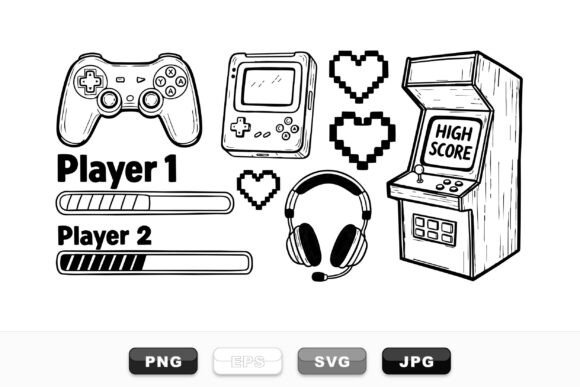
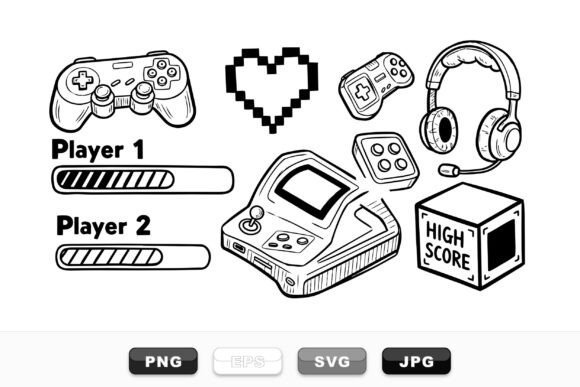
The first impression of this bundle is strikingly nostalgic. The aesthetic relies on a hand-drawn black and white sketch style that captures the raw energy of early video game culture. We are talking about vintage controllers, pixelated hearts, player progress bars, headsets, and high-score cubes. These elements do not feel like sterile, computer-generated vectors. Instead, they possess a playful, organic quality that suggests a human hand guided the pen. For designers working in the Crafts sector, particularly those targeting the handmade market, this texture is invaluable. It bridges the gap between digital precision and analog warmth.
Integrating Nostalgia into Modern Brand Identity
When considering brand identity, consistency is key. I tested these illustrations against various typography styles to see how they would function within a cohesive logo or header. The sketch style pairs surprisingly well with bold, blocky display fonts that mimic 8-bit text, but it also creates an interesting contrast when paired with clean, modern sans serif fonts. This versatility makes the Retro Gaming Clipart Bundle a strong candidate for small business branding that wants to appear approachable yet stylish.
For a recent Etsy product launch I consulted on, the client needed visuals for a line of gamer-themed stickers. The pixelated heart and the high-score cube from this bundle became the focal points of the sticker design. Because the lines are distinct and the style is monochromatic, the assets scale down remarkably well. This is crucial for print-on-demand services where clarity can be lost if the original artwork is too busy. The black and white nature of the sketches allows for easy colorization in software like Adobe Illustrator or even within a Canva template, giving the end-user flexibility without sacrificing the core aesthetic.
Performance Across Digital and Physical Media
A true test of any digital product is its adaptability across different mediums. I placed these graphics into several mockups to gauge their effectiveness. In the realm of social media graphics, specifically for Instagram and Pinterest, the high-contrast black lines pop effectively against pastel or vibrant backgrounds. They serve as excellent decorative accents for blog headers or promotional posts about gaming tournaments or retro tech reviews.
However, the real strength of this design bundle lies in physical applications. For Cricut projects and vinyl cutting, the clean lines of the SVG design files are a dream. Complex gradients or shadows often cause issues with cutting machines, but these straightforward sketches translate perfectly into physical cuts for tote bags, t-shirts, and mugs. I specifically tested the vintage controller sketch on a dark navy t-shirt mockup. When inverted to white, the design maintained its integrity, proving that this asset is not limited to light backgrounds.
In terms of packaging design, these elements work beautifully as secondary graphics. Imagine a box for artisanal coffee beans branded with a "Level Up" theme. The player progress bar could visually represent the roast level, while the headset icon could denote a "focus blend." This kind of creative application transforms simple clipart into functional marketing visuals that tell a story. It elevates the perceived value of the product, making it feel like a thoughtful, curated experience rather than a generic commodity.
Visual Hierarchy and Readability Considerations
While the artistic merit is high, a professional designer must always consider visual hierarchy. The sketch style, by nature, introduces a certain amount of visual noise. If you place these illustrations over a busy photograph or a patterned background, they will disappear. Therefore, these assets demand negative space. They work best in large layout areas or as hero graphics where they have room to breathe. Using them as tiny icons in a crowded footer or a complex data table would be a mistake. The details of the hand-drawn lines would blur, reducing legibility and impacting the overall professionalism of the design.
Furthermore, when using these in editorial design or long-form content, ensure there is sufficient contrast. I recommend testing the assets in pure black and white before adding color. If the lines are too thin, they may not print clearly on standard home printers, which is a common concern for customers buying printable design files. Always preview your final composition at actual size. What looks crisp on a 27-inch monitor might look fragile on a business card or a product label.
Practical Designer Notes for Commercial Use
Before integrating the Retro Gaming Clipart Bundle into a client deliverable, there are several technical checks I strongly advise. First, verify the file formats. Ensure you have access to both PNG design files with transparent backgrounds for quick drag-and-drop use in web design, and vector files for scalable sublimation design work. Transparency is non-negotiable for layering these graphics over colored backgrounds in web design or app interfaces.
Second, consider the licensing. Never assume a creative marketplace listing includes unrestricted rights. Confirm that the commercial license covers the specific volume of sales your client anticipates. For high-volume print-on-demand operations, you may need an extended license. Protecting your client from legal issues is part of your job as a designer.
Finally, think about the emotional appeal. These graphics evoke joy, nostalgia, and playfulness. They are not suitable for corporate financial reports or serious medical brochures. However, for brands targeting millennials, gamers, or anyone with a love for retro culture, they build immediate visual trust and audience engagement. They signal that the brand does not take itself too seriously, which can be a powerful differentiator in a saturated market.
In conclusion, the Retro Gaming Clipart Bundle is a robust tool for designers working in the Crafts and Graphics space. It offers a unique blend of hand-drawn charm and digital utility. Whether you are creating a t-shirt design for a local event, polishing up an Etsy shop banner, or developing a full brand identity for a gaming cafe, these assets provide a solid foundation. By respecting their limitations regarding scale and background complexity, you can leverage their strengths to create polished, professional, and emotionally resonant designs. This bundle is not just a collection of images; it is a versatile component of modern creative design strategy.