Fantasy VR Game Concept: A Designer's Review
As a designer who spends more time staring at stitch maps than actual screens, I approach new design assets with a mix of curiosity and skepticism. When I first opened the files for Fantasy Vr Game Concept. Visual Simulati, my immediate reaction wasn't just about the aesthetic; it was about feasibility. We often see stunning Illustrations and Graphics that look incredible on a monitor but turn into a nightmare under the needle. This review breaks down how this specific visual simulation concept translates from a vector idea to a tangible, stitched reality for your next embroidery project.
First Impressions: Mood and Visual Personality
The initial impact of Fantasy Vr Game Concept. Visual Simulati is its immersive, futuristic vibe. It captures that specific "digital dreamscape" mood perfectly, blending organic fantasy elements with the sharp, clean lines of virtual reality interfaces. For an embroidery designer, the layout feels intentional. It doesn't suffer from the cluttered details that often plague game-inspired art. The shapes are distinct, suggesting a strong potential for clear fill stitch areas and defined satin stitch borders. However, the visual personality leans heavily on gradients and subtle shifts in tone, which presents an immediate challenge: how do we replicate a "visual simulation" effect using static thread colors? This design demands a thoughtful approach to thread colors to maintain its depth without losing definition.
Real-World Application: The Custom Sweatshirt Scenario
To truly test the viability of this design, I imagined a real-life scenario: creating a limited-run collection of custom hoodies for a local gaming lounge. The goal was to produce a handmade product that felt premium and durable. Placing Fantasy Vr Game Concept. Visual Simulati on a heavy-weight cotton blend sweatshirt seemed like the perfect match. The stability of the fabric would support the likely density of the design, preventing the puckering that often ruins detailed machine embroidery design work on thinner materials.
In this context, the design shines as a statement piece. It's not a tiny logo; it's a centerpiece. For an Etsy seller or boutique owner, this kind of bold imagery drives value. Customers aren't just buying a sweatshirt; they are buying a piece of art that represents their identity. The finished product would likely appeal to gamers who appreciate high-quality, tactile representations of their digital hobbies. The key here is scaling. On a large back panel, the intricate details of the visual simulation can breathe. On a small chest pocket, those same details might merge into a blur, losing the very essence that makes the Illustrations unique.
Navigating Technical Challenges and Fabric Choices
While the concept is strong, practical application requires caution. If you plan to use this on a tote bag design or a structured cap, you must consider the surface texture. Caps, with their curved surfaces, are notoriously difficult for complex Graphics. The distortion caused by the curve could warp the geometric precision essential to the VR theme. Similarly, stretchy fabrics like performance tees require a robust stabilizer strategy. Without proper backing, the stitch density required to fill these shapes could cause the fabric to gather, ruining the crisp lines of the simulation effect.
Dark fabrics present another hurdle. Since this design relies on a "visual simulation" aesthetic, it likely utilizes lighter or neon tones to pop against a void-like background. Stitching light threads on dark custom apparel often requires an underlay strategy that isn't always obvious in standard embroidery file previews. You may need to manually add a white underlay layer to ensure the colors don't get muddied by the base fabric showing through. Furthermore, if the design includes fine lettering or tiny interface icons common in VR concepts, these areas are prone to breaking during washing. For items like baby embroidery projects or frequently washed kitchen towels, simplifying these micro-details might be necessary to ensure longevity.
Strategic Placement and Product Fit
Not every product is a candidate for Fantasy Vr Game Concept. Visual Simulati. Here is where this design fits best and where it should be avoided:
- Ideal Uses: Heavyweight hoodies, denim jackets, canvas tote bags, and decorative pillow covers where the fabric remains flat and stable.
- Use with Caution: Fitted t-shirts, stretchy athletic wear, and textured towels where the stitch definition might get lost.
- Avoid: Small hoop sizes that force compression of the design, and highly curved surfaces like baseball caps unless the design is significantly simplified.
Enhancing Brand Value and Customer Trust
For craft business owners, the choice of design directly impacts brand perception. Using a high-concept design like Fantasy Vr Game Concept. Visual Simulati signals professionalism. It tells your customer that you care about current trends and artistic integrity. When executed well, the embroidered patch or direct stitch becomes a conversation starter, increasing buyer engagement and social media shareability. However, poor execution—such as skipped stitches in dense areas or misaligned layers—can quickly erode trust. The complexity of this design means there is less room for error. A flawless finished product reinforces your reputation for quality, while a flawed one can lead to returns and negative reviews.
Practical Notes for the Embroidery Studio
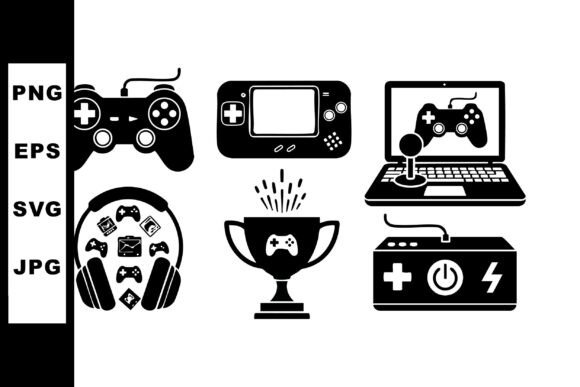
Before committing this design to a client's order or listing it as a small shop product, there are several critical steps to take. First, always test the design on scrap fabric that matches your final material. This allows you to check thread color contrast and verify that the stitch density doesn't cause excessive stiffness. Second, review the file formats provided. The product description mentions Vector illustration EPS, JPG, and SVG. These are excellent for printing and digital mockups, but for machine embroidery, you need a dedicated digital embroidery file (like PES, DST, or EXP). If the listing does not explicitly include these machine-ready formats, you will need to digitize the vector art yourself or confirm compatibility before purchase.
Additionally, consider creating black-and-white mockups to evaluate the contrast independent of color. This helps identify areas where running stitch details might disappear. Finally, double-check the licensing terms. While the design is categorized under Illustrations and Graphics, using it for commercial embroidery versus personal gifts often carries different restrictions. Ensuring you have the right to sell items featuring Fantasy Vr Game Concept. Visual Simulati is crucial for protecting your business.
In conclusion, Fantasy Vr Game Concept. Visual Simulati offers a compelling bridge between digital art and physical craft. With careful planning regarding fabric choice, stabilization, and file preparation, it can elevate a simple garment into a standout personalized gift or a flagship item for your Etsy listings. It rewards the meticulous designer who respects the limitations of the needle while pushing the boundaries of creative expression.